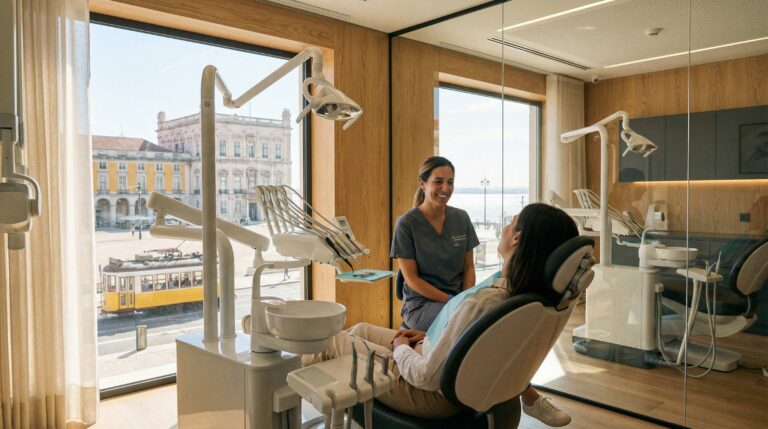

How AI is Driving Health Clinic Growth in Lisbon
The Digital Transformation of Healthcare in Lisbon
Lisbon, a city known for its rich history and vibrant culture, is also emerging as a hub for innovation in healthcare. As health clinic growth Lisbon continues its upward trajectory, many institutions are seeking advanced solutions to enhance patient care, streamline operations, and ultimately, scale their services. The integration of Artificial Intelligence (AI) into health clinics is no longer a futuristic concept but a present-day reality, offering transformative potential for the sector.
For years, healthcare providers have grappled with increasing administrative burdens, diagnostic complexities, and the constant demand for personalized patient experiences. Traditional methods, while foundational, often fall short in addressing the rapid pace of modern medical advancements and the evolving expectations of patients. This creates significant pain points, from long waiting times to diagnostic inaccuracies, all of which can hinder a clinic’s ability to grow and serve its community effectively.
Consider the daily challenges faced by a typical health clinic in Lisbon. Appointments need scheduling, patient records require meticulous management, and diagnostic data must be analyzed with precision. Each of these tasks, when performed manually, consumes valuable time and resources that could otherwise be dedicated to direct patient interaction and care. The sheer volume of data generated in healthcare further exacerbates these issues, making it difficult for human staff to process and derive meaningful insights efficiently.
Addressing Pain Points with Intelligent Solutions
The pressure to deliver high-quality care while managing operational costs is immense. Many clinics struggle with optimizing their resource allocation, leading to inefficiencies that impact both staff morale and patient satisfaction. Furthermore, the need for continuous improvement in diagnostic accuracy and treatment efficacy is paramount, yet achieving this often requires significant investment in technology and training.
This is where AI steps in, offering a suite of tools designed to alleviate these pressures. From automating routine administrative tasks to providing sophisticated analytical capabilities, AI can revolutionize how health clinics operate. The goal is not to replace human expertise but to augment it, empowering healthcare professionals to focus on what they do best: caring for patients. The potential for health clinic growth Lisbon through these intelligent solutions is substantial, marking a new era for healthcare providers.
AI-Powered Solutions for Enhanced Clinic Operations
One of the most immediate benefits of AI in health clinics is the automation of administrative processes. AI-powered chatbots can handle initial patient inquiries, schedule appointments, and provide basic information, freeing up reception staff to manage more complex tasks. This not only improves efficiency but also enhances the patient experience by providing instant responses and reducing wait times. Imagine a patient in Lisbon receiving immediate assistance for a query, rather than waiting on hold.
Beyond administration, AI plays a crucial role in diagnostics. Advanced algorithms can analyze medical images, such as X-rays, MRIs, and CT scans, with remarkable accuracy, often identifying subtle patterns that might be missed by the human eye. This leads to earlier and more precise diagnoses, which are critical for effective treatment. For health clinic growth Lisbon, this means a reputation for cutting-edge care and improved patient outcomes.
AI also facilitates personalized treatment plans. By analyzing vast amounts of patient data, including medical history, genetic information, and lifestyle factors, AI can help clinicians tailor treatments to individual needs. This precision medicine approach is far more effective than one-size-fits-all solutions, leading to better patient responses and reduced side effects. The ability to offer such bespoke care is a significant differentiator for clinics.
Furthermore, predictive analytics, a subset of AI, can forecast disease outbreaks, identify at-risk patient populations, and optimize resource allocation within clinics. This proactive approach allows health clinics to prepare for future demands, ensuring they have the necessary staff and equipment to meet patient needs. Such foresight is invaluable for sustainable health clinic growth Lisbon.
Local Impact: Lisbon’s Healthcare Future
The adoption of AI in Lisbon’s health clinics is not just about technological advancement; it’s about improving the lives of its citizens. By embracing these innovations, clinics can offer more accessible, efficient, and personalized care. This aligns perfectly with Lisbon’s vision for a smart, healthy city, where technology serves to enhance urban living.
Internal Link: Lisbon Health Tips
Internal Link: Portugal Medical Advances
The Path Forward for Health Clinic Growth in Lisbon
The journey towards full AI integration requires careful planning and execution. Clinics must invest in robust data infrastructure, ensure data privacy and security, and provide adequate training for their staff. However, the long-term benefits—improved patient outcomes, operational efficiency, and enhanced competitive advantage—far outweigh the initial challenges. The future of health clinic growth Lisbon is undeniably intertwined with the intelligent application of AI.
Embracing AI is not merely an option but a strategic imperative for health clinics aiming to thrive in Lisbon’s dynamic healthcare landscape. It offers a clear pathway to not only meet but exceed the demands of modern medicine, ensuring that clinics remain at the forefront of patient care and innovation.